The Engineering of Automated Dough Science: Deconstructing Modern Bread Machines
Update on Nov. 9, 2025, 4:20 p.m.
The Engineering of Automated Dough Science: Deconstructing Modern Bread Machines
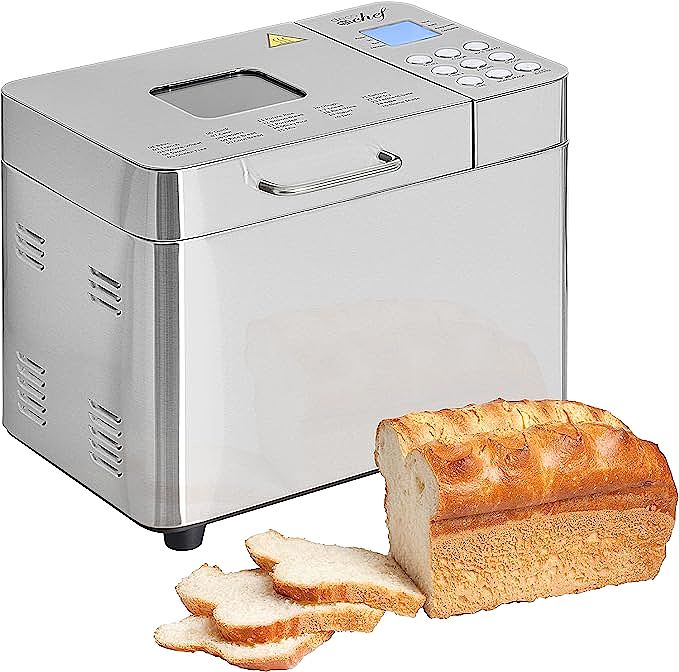
The modern bread maker is a fascinating piece of kitchen engineering. It is an appliance designed to automate the deeply intuitive, time-sensitive, and highly physical process of dough production. Its function is to replace the hands of a skilled baker with a series of pre-programmed mechanical and thermal cycles. Understanding the design of such a machine—like the Breadman BK1060S 2-Pound Professional Bread Maker—requires a deep dive into the specific problems it attempts to solve, particularly in the delicate domains of gluten integrity, hydration physics, and algorithmic control.
The appliance is not merely a box that mixes and heats; it is a sophisticated, single-purpose laboratory designed to control the complex biology of yeast and the structural chemistry of flour. This exploration examines the breakthroughs and trade-offs inherent in automating this ancient craft.
Section I: Mechanical Innovation for Aesthetic Integrity
The most common, and often aesthetically irritating, flaw of early bread machines was the large, jagged hole left by the kneading paddle. This is a direct consequence of the paddle being necessary to develop the gluten network but then becoming baked into the loaf.
The Collapsible Paddle Solution
The collapsible kneading paddles on the BK1060S are a mechanical engineering solution to this aesthetic problem. The design principle is based on a spring-loaded or cam-driven hinge at the paddle’s base. After the final punch-down and just before the baking phase begins, the paddle is designed to automatically fold down flat against the bottom of the pan. This action significantly minimizes the surface area of the paddle baked into the final loaf, resulting in only a small, easily concealed indentation, rather than a debilitating crater.
This feature directly reflects a commitment to the user’s desire for a polished end product, elevating the machine’s output from mere convenience baking to something closer to a professional result. It addresses the fact that while the hole does not affect flavor, it certainly compromises the loaf’s structural integrity and presentation.
The Ingredient Timing Paradox: Automatic Dispensers
The automatic fruit and nut dispenser is another mechanical feature designed to solve a critical problem in dough chemistry: timing. The moment additions are introduced is crucial for two reasons:
1. Gluten Inhibition: Ingredients like oily nuts, certain spices, or highly acidic fruits can coat flour particles, preventing proper water absorption and thereby inhibiting the formation of the gluten network.
2. Structural Damage: Introducing hard additions too early can shred the delicate gluten strands developed during the initial kneading, leading to a denser, lower-rising loaf.
The automatic dispenser is a timer-governed mechanism designed to bypass these issues by releasing the inclusions at the optimal point—after the primary gluten network has been established but before the final rise. However, user feedback reveals the limitation of this automation. Different ingredients (e.g., sticky raisins vs. light seeds) behave differently, and a rigid automatic cycle sometimes misses the ideal timing window, resulting in poor distribution. This highlights a universal truth in baking: automated timing struggles to account for the physical variability of ingredients.

Section II: Algorithmic Baking – The Chemistry of Specialized Cycles
The Breadman BK1060S features 14 specialized baking functions, each representing a distinct algorithmic sequence of mixing speed, temperature control, and time allocation. These programs are attempts to replicate the subtle adjustments a master baker would make for different flour types.
The Gluten-Free Algorithm
The Gluten-Free cycle is a significant algorithmic departure from traditional cycles. Gluten-free flours (e.g., rice, potato starch, corn) lack the essential proteins (glutenin and gliadin) required to form an elastic structure. Consequently, the dough remains more batter-like. The gluten-free program is specifically engineered to: * Minimize Kneading: Excessive mixing can destroy the structure created by alternative gums (like xanthan or guar gum), so the cycle employs shorter, gentler mixing. * Optimize Rising: Gluten-free doughs require different resting temperatures and are often programmed for a single, rapid rise to achieve maximum volume before the structure collapses.
The Artisan Dough Program: Time as an Ingredient
The Artisan Dough cycle (a total of 5:15 hours) is the machine’s most sophisticated program, leveraging time as an ingredient to develop complex flavor profiles. This extended cycle is designed to mimic the slow, cold fermentation used in traditional baking to produce a deep, nuanced flavor and chewy crumb.
During this prolonged, temperature-controlled fermentation, yeast and natural bacteria produce organic acids (lactic and acetic) and aromatic esters. These chemical byproducts are what differentiate the complex taste of artisan bread from a quick white loaf. This cycle proves that advanced bread machines are not just time-savers; they are time-processors, using duration and stable temperature to unlock higher-order flavors.
Section III: The Hydration Paradox and User Intervention
Despite the mechanical and algorithmic sophistication, the bread maker cannot completely eliminate the need for human intervention. The single greatest variable in baking is hydration—the ratio of liquid to flour.
As multiple user reviews for the BK1060S attest, almost every loaf required adding significant extra liquid during the mixing stage. This is known as the Hydration Paradox: even with meticulously precise ingredient measurements, external factors like ambient humidity, altitude, and the flour’s protein content (which affects its ability to absorb water) inevitably alter the final dough consistency.
The machine’s instruction manual wisely advises the user to check the dough consistency manually five to eight minutes into the second knead. The ideal dough should form a soft, cohesive, tacky ball. This is the moment where the baker must become the engineer, adding a teaspoon of liquid or a tablespoon of flour to achieve the correct viscoelastic state. This required “hands-on” correction underscores the fact that automated baking remains a collaboration between human intuition and machine reliability.

Section IV: Engineering Trade-offs and Longevity
The final consideration is the long-term engineering trade-off. The Breadman BK1060S demonstrates a strong initial value proposition by offering high-end features (collapsible paddle, dispenser) at a competitive price. However, user feedback regarding the thinness of the stainless steel, the paddle scratching the non-stick pan quickly, and short product lifespan (often cited as two years) highlights compromises in material durability and build quality.
Furthermore, the lack of information on the digital display (a simple countdown timer without cycle name) forces the user to manually track the complex algorithmic sequence, which is a significant Human-Machine Interface (HMI) flaw. An effective automated system should clearly communicate its current operation to maintain user confidence and allow for informed intervention.
The Breadman BK1060S is, in essence, a successful experiment in feature-driven automation, demonstrating advanced solutions to classic baking problems. However, like any complex appliance, its value is ultimately determined by the consistency of its core function and the durability of its construction. It stands as a prime example of the ongoing effort to blend the intuitive art of baking with the calculated precision of engineering.