TIGER IH Home Bakery "YAKITATE": Baking Perfect Bread Made Easy

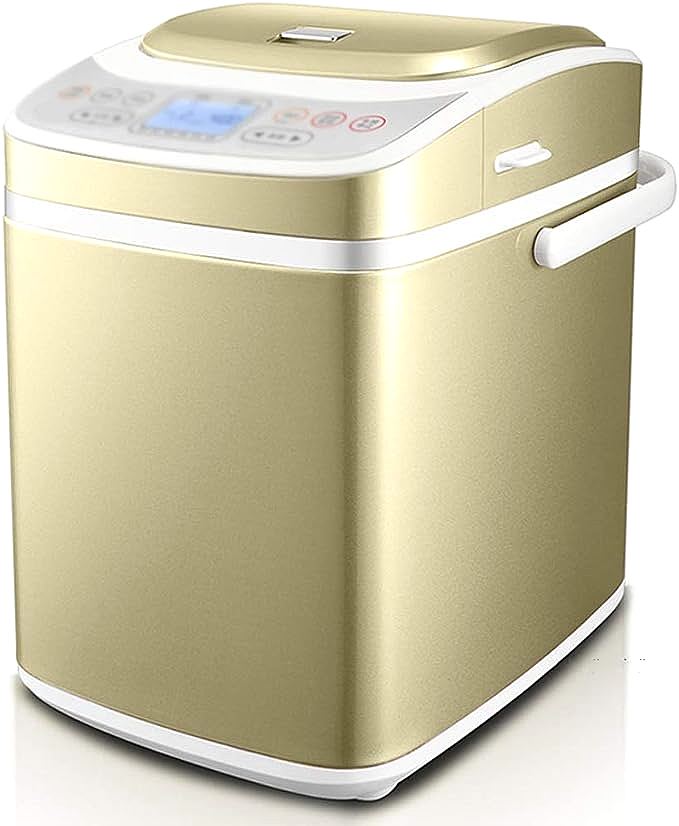
Tiger IH Home Bakery "YAKITATE" Bread Maker KBY-A100W
We’ve all been there. Four hours of patient work—measuring, mixing, waiting—culminates in a moment of truth. You pull the loaf from the oven, and your heart sinks. The crust, instead of a delicate, crackling shell, is a thick, leathery armor. The inside, which promised a light, airy crumb, is dense, damp, and disappointingly solid. It looks like bread, but it’s a failure.
The frustrating gap between the bread we dream of and the bread we often produce doesn't come down to a secret ingredient or an ancient family recipe. It comes down to control. The difference between an artisan baker and a home cook is their ability to command the intricate dance of physics and biology that unfolds within a lump of dough. Baking isn’t magic; it’s a feat of engineering.
To prove it, we're going to dissect this process. And for our laboratory, we'll use a fascinating case study: a hyper-precise, induction-heated bread maker from Japan, the Tiger "YAKITATE". We aren’t here to review it. We are here to use it as a scientific instrument, a window into the universal principles that govern every successful loaf, whether it's baked in a state-of-the-art machine or a wood-fired hearth.

The Physics of a Flawless Crust: A Tale of Heat and Time
The crust is where the battle for greatness is most visibly won or lost. It requires a delicate balance: it must be thin and crisp, deeply browned for flavor, yet not so thick that it insulates the interior from cooking properly. This is fundamentally a problem of heat transfer.
Most conventional home ovens are deeply flawed instruments. They operate on a clumsy combination of radiation from heating elements and convection from air movement, creating a chaotic thermal environment riddled with hot spots and temperature swings. This unevenness is the primary culprit behind a disappointing crust. One side burns while the other remains pale; the top darkens too quickly, forcing you to pull the bread before the inside is ready.
The beautiful browning we seek is the result of a complex chemical cascade known as the Maillard reaction. Triggered at around 140°C (285°F), it’s a reaction between amino acids and reducing sugars that creates hundreds of new aroma and flavor compounds, giving bread its characteristic savory, nutty, and roasted notes. This is distinct from caramelization, which is simply the browning of sugar. The Maillard reaction is flavor architecture, and to build it perfectly, you need uniform, sustained heat across the entire surface of the dough.
This is where our case study provides a startlingly elegant solution. Instead of blasting the dough with external heat, the "YAKITATE" uses Induction Heating (IH). An electromagnetic field induces electrical eddy currents directly within the metal of the bread pan itself, causing the entire pan to become the heating element. The heat is generated everywhere at once, from the inside out, bathing the dough in a perfectly uniform thermal blanket. This eliminates hot spots and allows the entire surface to enter and remain in the Maillard reaction's sweet spot, developing a uniformly thin, crisp, and flavorful crust.
This rapid, intense heating has another profound effect: oven spring. In the first few minutes of baking, the dough undergoes a dramatic and final surge in volume. This is caused by the frantic, last-gasp activity of the yeast and the expansion of trapped gases (water vapor and CO2) under heat. A conventional oven's slow, uneven heating often stifles this phenomenon. But the immediate, powerful, and uniform heat of an induction system maximizes it, pushing the loaf to its full potential volume and helping to create that coveted open, airy crumb structure.

The Biology of a Living Dough: Taming a Microscopic Workforce
If the crust is a physics problem, the crumb—the interior texture of the bread—is a biological one. Dough is not an inert substance; it's a living ecosystem, and the star of the show is yeast.
The entire structure of bread depends on creating the perfect house for this microscopic workforce. That house is the gluten network. When you knead dough, you're not just mixing ingredients; you are encouraging two proteins in wheat flour, glutenin and gliadin, to link up and form an elastic, three-dimensional matrix. This matrix is the architecture of your bread, a web of microscopic balloons that must be strong and flexible enough to trap the carbon dioxide gas produced by the yeast.
But this construction process is delicate. The mechanical friction of kneading generates heat. Too much heat can damage the gluten, making it slack and weak. This is a common failure point for powerful stand mixers that can quickly overheat the dough. Our Japanese bread machine addresses this with an engineering subtlety: it uses a DC motor specifically designed to operate with high torque at low speeds, minimizing frictional heat and protecting the integrity of the fragile protein network as it forms.
With the architecture in place, success hinges on managing the workers. Yeast (Saccharomyces cerevisiae) is a finicky creature. It has a narrow temperature comfort zone, thriving between 25-35°C (77-95°F). Too cold, and it becomes sluggish, leading to a dense, under-proofed loaf. Too hot, and it works itself into a frenzy, producing off-flavors and exhausting its food supply before the gluten structure is ready, leading to a collapsed loaf.
This is where the concept of a feedback loop becomes critical. True control requires not just applying heat, but constantly measuring and responding. The "YAKITATE" embodies this principle by acting as a life-support system for the yeast. It employs three separate temperature sensors—measuring the room, the inside of the machine, and the dough itself. This data is fed to a microprocessor that then decides whether to engage the heater or a cooling fan. It's a closed-loop system, constantly monitoring and adjusting to maintain the dough in the perfect biological state, regardless of whether your kitchen is warm or cold. This is also the logic behind its automatic yeast dispenser: it waits until the flour is fully hydrated and the temperature is perfect before introducing the yeast to its ideal working environment.
By precisely controlling these biological processes, the machine ensures a consistent, optimal fermentation. The result is a soft, springy crumb, rich with the complex, nuanced flavors that only a happy, healthy yeast culture can produce.
The ultimate lesson here is not that you need a specific machine to bake good bread. The lesson is that baking is a system. It is a beautiful and complex interplay of thermodynamics, biochemistry, and control theory. By understanding these principles, you are no longer just a follower of recipes; you become the engineer of your own baking. Armed with this knowledge, you can diagnose failures, make intelligent adjustments, and approach any loaf with confidence. Your kitchen has just become a laboratory.
Tiger IH Home Bakery "YAKITATE" Bread Maker KBY-A100W
Related Essays

The Engineering of Automated Dough Science: Deconstructing Modern Bread Machines

Deconstructing the "Dud Loaf": The Science Your Bread Machine Manual Forgot
Generic SMLJLQ Bread Maker: Unlock Perfect Homemade Bread with Automated Ease

Ztjjg CZDYUF 220V Home Bread Machine: Fresh, Homemade Bread Made Easy

LMMDDP Cake Machine: Effortless Artisan Bread Baking at Home

Russell Hobbs 18036-56 Bread Maker: Fresh, Homemade Bread Made Easy

GKEVER Bread Maker: Effortless Homemade Bread with Intelligent Technology

GKEVER Intelligent Bread Maker: Bake Fresh Bread Effortlessly with 18 Presets

Generic SMLJLQ Mini Bread Maker: Baking Science Made Easy
