Nostalgia on the Countertop: Why Retro Design Rules the Modern Kitchen
Update on Jan. 13, 2026, 5:24 p.m.
In an era dominated by sleek touchscreens, voice-activated assistants, and minimalist stainless steel monoliths, a counter-movement is taking hold in the heart of the home. The kitchen, once racing towards a futuristic ideal, is looking backward. The resurgence of the retro toaster and vintage-inspired appliances is not merely a fashion trend; it is a psychological response to the complexities of modern life.
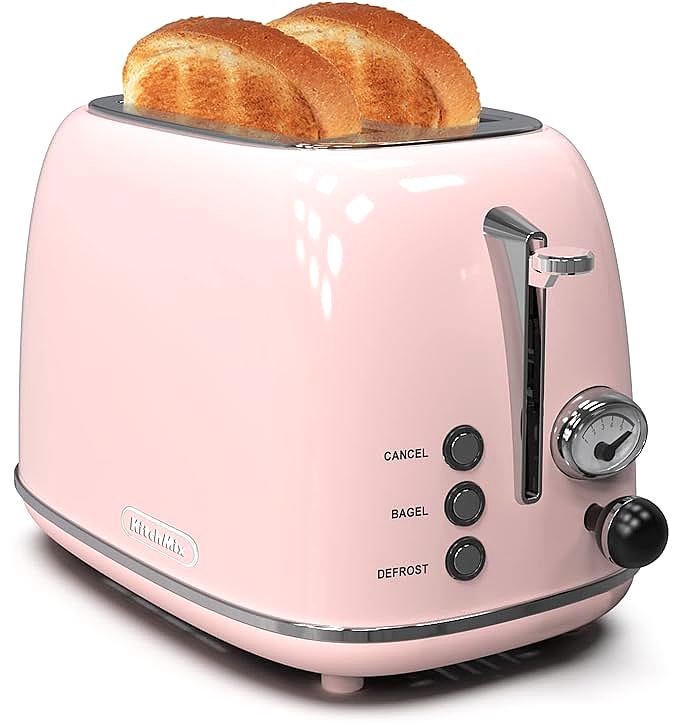
This “Newstalgia” isn’t about rejecting technology; it’s about softening it. It involves wrapping modern functionality in a form that evokes comfort, simplicity, and a sense of enduring quality. Devices like the Brentwood TS-270BL, with its curvaceous silhouette and vibrant hue, serve as prime examples of how industrial design is pivoting to meet our emotional needs alongside our culinary ones.

The Psychology of the Past
Why do we crave appliances that look like they belong in a 1950s diner? According to 2023 research published in the Journal of Consumer Research, engaging with nostalgic objects buffers against existential threats and loneliness, providing a sense of social connectedness and continuity.
A retro toaster acts as a visual anchor. It reminds us of a time—real or imagined—when breakfast was a seated family ritual rather than a rushed calorie intake. The rounded edges, analog dials, and mechanical levers offer a tactile satisfaction that a flat digital panel simply cannot replicate. The physical act of pushing down a lever provides haptic feedback that grounds us in the moment, a small but significant respite from our virtual lives.
Color as a Culinary Ingredient
The retro trend is intrinsically linked to the “Dopamine Decor” movement, which prioritizes the use of color to induce joy. For decades, the “professional” kitchen aesthetic dictated a palette of steel, grey, and black. While functional, it can feel sterile.
The introduction of specific colors, such as the distinct blue of the Brentwood TS-270BL, changes the energy of the room. * Color Psychology: Blue is famously associated with calmness and serenity. In a high-stress environment like a kitchen during the morning rush, a blue kitchen appliance can act as a subconscious signal to breathe and slow down. * Visual Warmth: Unlike the cold reflectivity of chrome, colored appliances absorb light and add visual warmth, making the kitchen feel more lived-in and welcoming.
Form Follows Emotion
Modernist design follows the dictum “form follows function.” Retro design amends this to “form follows emotion.” The soft curves and tapered legs of vintage-style appliances are friendly and approachable. They lack the aggressive, sharp angles of contemporary tech.
This design language communicates safety and ease of use. When you see a simple browning knob and a mechanical lever, you instinctively know how to use the machine. There is no learning curve, no app to download, and no firmware to update. This simplicity is a luxury in itself. The Brentwood retro toaster embodies this philosophy—it doesn’t demand your attention; it simply serves its purpose while looking charming.
The Anchor Piece
You don’t need to renovate your entire kitchen to change its vibe. Designers often recommend “anchor pieces”—small, affordable items that define the room’s character. A colorful, retro toaster is a low-commitment way to inject personality into a rental apartment or a neutral kitchen.
It becomes a conversation starter, a piece of functional art. It proves that utility doesn’t have to come at the expense of beauty. Whether your kitchen is a stark white minimalist box or a cozy cottagecore haven, a touch of retro design bridges the gap between the house you live in and the home you feel.
Add a splash of nostalgia to your morning. Discover the charm of the Brentwood Retro Toaster.